
National Trade Federation: Americans plan to spend $23.9 billion on Valentine’s Day this year
February 7-13, 2022
By The Daily Record staff
Never mind inflation if there are hearts to win and new loves to woo.
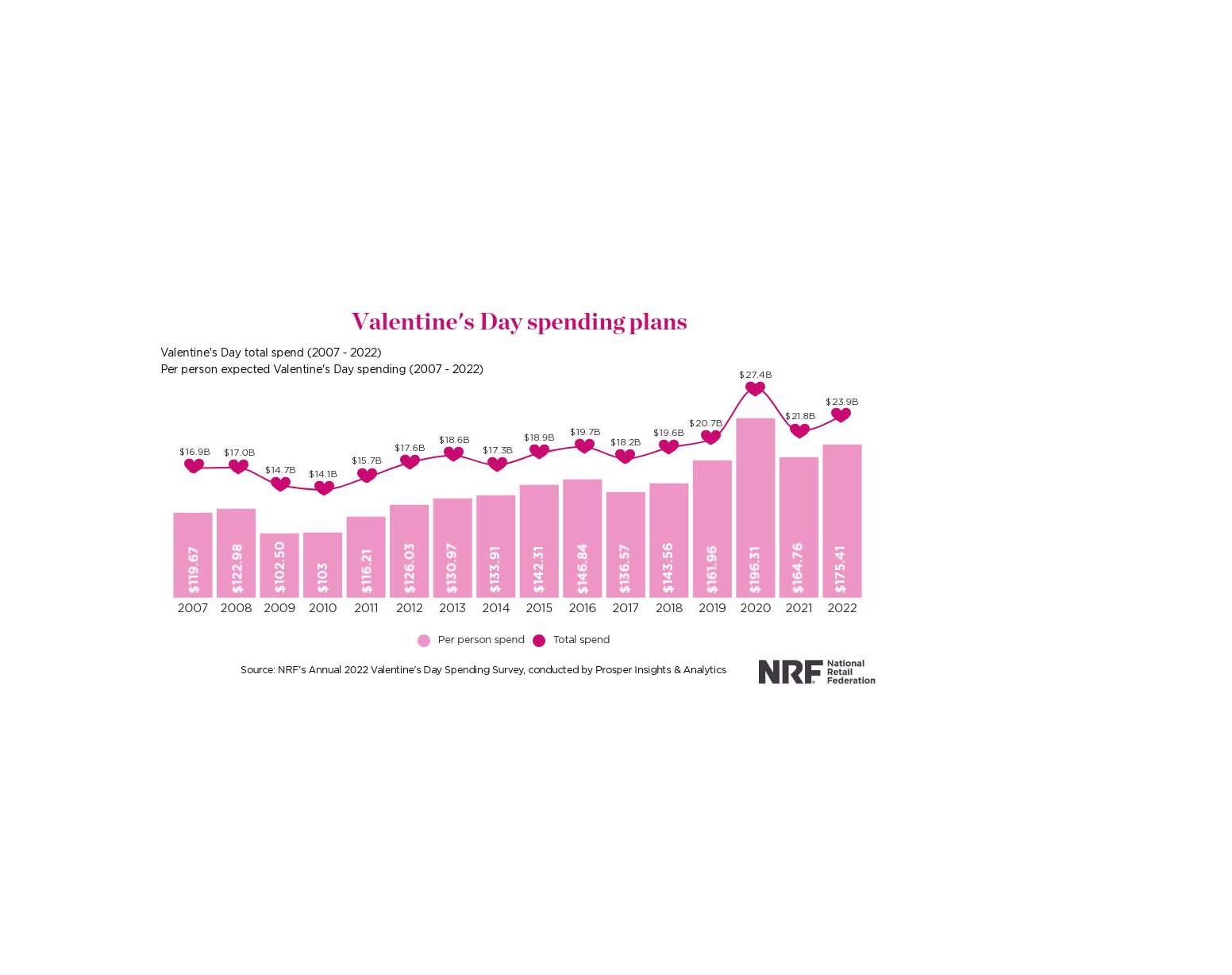
According to the annual survey released Jan. 31 by the National Retail Federation (NRF) and Prosper Insights & Analytics, Valentine’s Day spending is expected to reach $23.9 billion this year, up from $21.8 billion in 2021 and the second-highest year on record.
“Following the historic level of consumer spending over the winter holidays, it appears that the trend will continue into 2022,” NRF President and CEO Matthew Shay said. “Valentine’s Day is a special occasion for many Americans, even more so as we navigate out of the pandemic, and retailers are prepared to help them mark the holiday in a memorable and meaningful way.”
And after being cooped up inside for nearly two years, more than half or 53% of U.S. consumers plan to celebrate the holiday in 2022, up from 52% in 2021. More than three-quarters or 76% of those celebrating indicate it is important to do so given the current state of the pandemic.
Meanwhile, shoppers expect to spend an average of $175.41 per person on Valentine’s Day gifts, up from $164.76 in 2021. The increase comes as many Valentine’s Day romancers intend to spend more on significant others or spouses, according to the annual survey. The increase in spending is occurring on Feb. 11 despite a recent U.S. Bureau of Labor Statistics (BLS) report showing that the U.S. Consumer Price Index, the nation’s main inflation barometer, has increased 7% in the past year.
So, what’s on the Valentine’s Day shopping list. The NRF survey shows candy (56%), greeting cards (40%) and flowers (37%) remain the most popular gift items this year. Nearly one third, or 31% of respondents plan to gift an “evening out” this year, up from 24% in 2021 and just slightly below pre-pandemic levels, for a total of $4.3 billion. Almost a quarter or 22% will opt for a big-ticket jewelry gift to a special someone. Total spending on jewelry is estimated at $6.2 billion, up from $4.1 billion in 2021 and the highest in the survey’s history.
Demand for gifts of experience, such as tickets to a concert or sporting event, has also returned to pre-pandemic levels, with 41% saying they would “love to receive a gift of experience,” up from 36% last year, the survey notes.
“While traditional Valentine’s Day gifts like candy and flowers seem to never go out of style, gift givers and recipients alike are more comfortable heading out for a special meal or participating in a new experience than they were a year ago,” said Phil Rist, executive vice president at Prosper. “This is especially true among younger age groups.”
As the pandemic continues to drive e-commerce growth, online continues to be the most popular shopping destination for Valentine’s Day this year, visited by 41%, followed by department stores at 32%, discount stores at 28%, local small businesses at 18% and florists at 17%.
The survey of 7,728 U.S. adult consumers was conducted Jan. 3-11 and has a margin of error of plus or minus 1.1 percentage points. Earlier this month, NRF reported that retail sales during the November-December holiday season reached a total $887 billion, exceeding its forecast of up to 11.5% growth. On average, retailers expect 17.8%, or $158 billion, of merchandise sold during the holiday timeframe to be returned.
Based in Washington, D.C., the National Retail Federation is the world’s largest retail trade lobby, representing retailers of all sorts – from mom-and-pop Main Street storefronts to online corporations, department store chains, and brick-and-mortar conglomerates such as Walmart, Macy’s, Dillard’s, Amazon, Overstock.com and Target.
According to NRF, retail is the nation’s largest private-sector employer, contributing $3.9 trillion to annual GDP and supporting one in four U.S. jobs – 52 million working Americans.
PHOTO CAPTION:
Valentine’s Day spending is expected to reach $23.9 billion this year, up from $21.8 billion in 2021 and the second-highest year on record, according to the National Retail Federation.