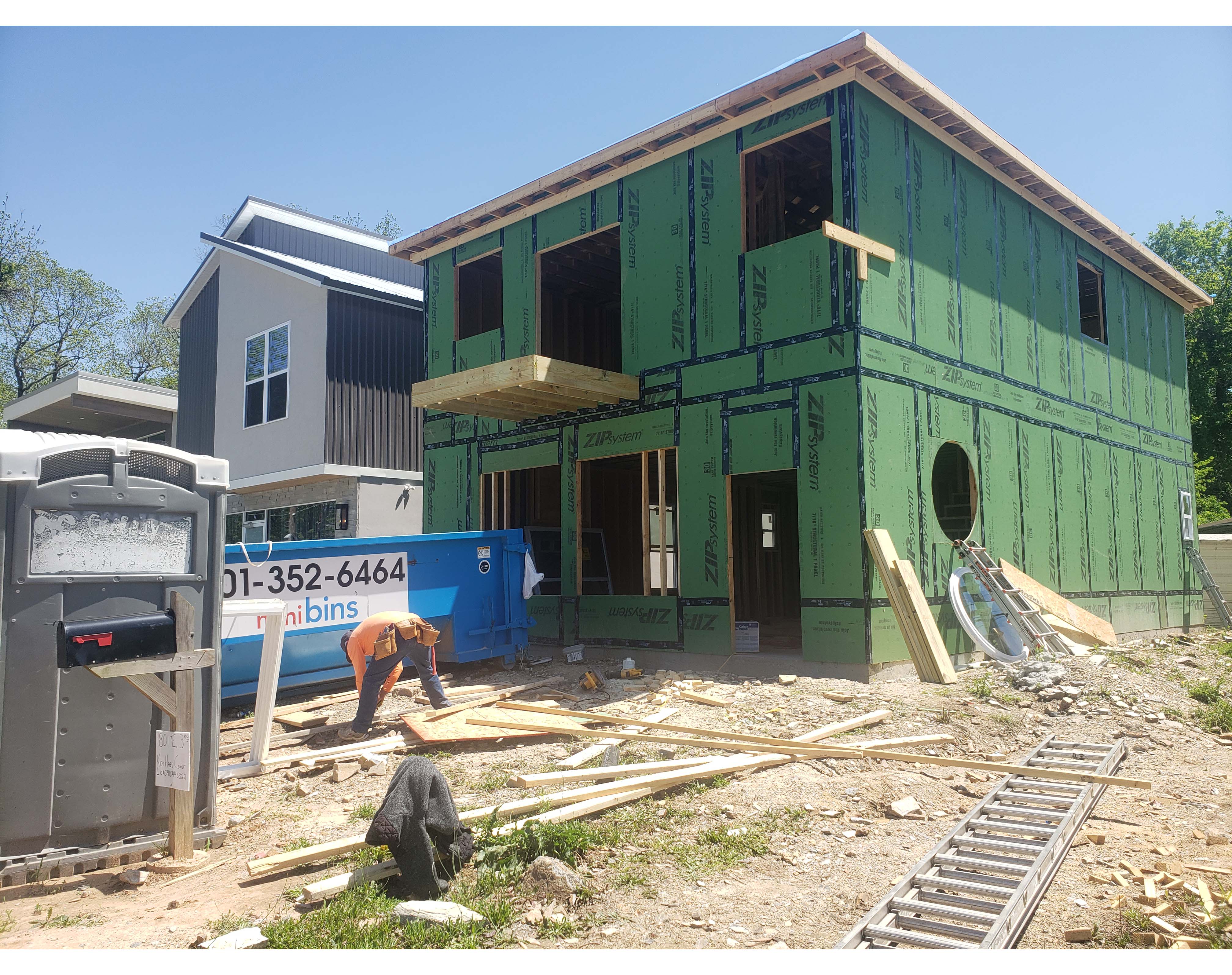

Record housing, rent prices expected to continue upward for rest of 2022
May 2-8, 2022
By Wesley Brown
One of the biggest causes of the skyrocketing inflation in Arkansas and across the U.S. is the rise in housing and rental costs during the pandemic.
Recent economic data from the Federal Reserve and one of the nation’s top real estate firms shows that consumers will face even more pain through the rest of 2022 and well into next year. On April 22, Seattle-based Zillow Group said some shoppers are facing a one-two punch this spring, including quickly rising mortgage rates that are compounding affordability challenges brought on by record home value growth.
Also, the cost of a 30-year mortgage on the typical U.S. home is now 19.5% higher than it was just three months ago, according to Zillow’s March Real Estate Market Report. Despite this, the pace and volume of sales picked up in March, showing the depth of the pool of home buyers willing and able to meet current asking prices.
According to Zillow, the typical U.S. home is worth 20.6% more than it was a year ago, the 12th straight month in which a new record for annual home value growth has been set. Mortgage rates, which fell below 3% a year ago, entered March at 3.51% and rose as high as 4.54% during the month.
Combined, rising home values and mortgage rates have pushed the monthly payment on the typical U.S. home 38% higher than it would have been a year ago, assuming a 30-year mortgage with a 20% down payment.
“Higher mortgage rates were anticipated this year, but the speed of their rise has been breathtaking,” said Jeff Tucker, Zillow’s senior economist. “Record low mortgage rates had been an affordability lifeline during the pandemic, keeping monthly payments in check even while prices climbed quickly. March was the biggest test yet of whether enough buyers can meet the new asking prices to keep home values growing at a record pace, and the answer was ‘So far, yes.’ There will be a point when the cost of buying a home deters enough buyers to bring price growth back down to Earth, but for now, there is plenty of fuel in the tank as home shopping season kicks into gear.”
One bright spot for home shoppers is that the long-awaited seasonal inventory boost finally came in March. After six consecutive months of dwindling inventory — a streak that lasted longer into the year than is typical — 11.6% more homes were available in March than in February, the largest one-month jump in Zillow’s records.
Still, inventory is 22.5% lower than it was a year ago, and the roughly 754,000 homes that were on the market in March represent a figure lower than in any month on record before January 2022. The number of newly listed homes in March jumped 35.8% from February to about 386,000, but that remains 8.5% lower than last March’s pace of new listings.
Buyers proved they remain ready to gobble up any inventory that comes their way. Newly pending sales rose 11.6% in March from February — the exact same increase as inventory — demonstrating that demand is still outstripping supply, even with higher mortgage rates. The speed of sales also picked up in March, accelerating to nine days for the typical sale, down from 11 in February.
Zillow’s home value forecast now calls for 14.9% growth through March 2023, down from a year-ahead forecast of 16.5% growth made in February. Zillow’s existing home sales forecast has been lowered as well, to 6.09 million sales in 2022, which would mark a slight decline of 0.5% from 2021. Affordability headwinds — led by sharp mortgage rate increases — have strengthened faster than expected, but these figures still represent a remarkably competitive housing market in the coming year. Annual home value growth of 14.9% would have been the highest ever recorded by Zillow before June 2021, and 6.09 million existing home sales would mark the second-best calendar year total since 2006.
Renters may have also hit a turning point as the typical U.S. rent grew 16.8% year-over-year to $1,904. That’s down from 17.2% annual growth in February, marking the first slowdown in annual rent growth in a year, Zillow said. The rapid rise in rent prices over the past year has stretched affordability in much of the country and made it harder for potential first-time buyers to save for a down payment.
The Zillow report is comparable to the highly watched 2022 report on April 18 from the Federal Reserve Bank of New York that released results from its 2022 (SCE) Housing Survey, which is part of the broader Survey of Consumer Expectations and provides information on consumers’ housing-related experiences and expectations.
The survey shows that households expect home prices to rise at a faster pace over the coming 12 months than they expected last year. However, rent change expectations were higher than home price expectations over both the short- and medium-term. Households surveyed by the New York Fed also expect relatively low home value appreciation over the next five years. Owners, and especially renters, expressed a lower expectation of buying a home if they were to move over the next three years.
Renters also reported a marked decline in their expectations of ever owning a home due to rising prices. A large majority of households continue to view housing as a good financial investment, although the share characterizing housing as a “somewhat good” or “very good” investment declined slightly from a February 2021 series high, and the share describing it as “somewhat bad” or “very bad” rose to its highest level since 2018. The results suggest that households see further substantial house price growth in the near term, but a pronounced slowdown in price growth in subsequent years.
Other key findings of the New York Fed survey are:
• Average home price change expectations at the one-year horizon rose sharply relative to last year. The mean one-year ahead expected change in home prices was 7%, over a percentage point above last year’s reading of 5.7%, and the highest level since the inception of the survey in 2014.
• Households’ home price change expectations for the five-year horizon were unchanged from last year. Households expect prices to rise by 2.2% per year on average for the next five years. Combined with the expectation of a 7% increase over the next 12 months, this suggests that households expect a pronounced slowdown in price growth after next year.
• Rent change expectations were higher than home price expectations over both horizons. On average, households expect rent increases of 11.5% over the next 12 months, compared to 6.6% in February 2021. Over the next five years, households expect annual rent increases of 5.2%, up from 4.4% a year ago. Taken together, these numbers suggest a spike in rents in the near term, followed by more moderate growth in subsequent years.
Earlier in April, the U.S. Bureau of Labor Statistics (BLS) reported that the nation’s Consumer Price Index’s “all-items” inflation barometer rose 1.2% in March, up from 0.8% in February. Over the last 12 months, the all items index increased 8.5%, the largest increase since December 1981.
Increases in the indexes for gasoline, shelter and food were the largest contributors to all items index. The shelter index rose 5% over the last 12 months, its largest 12-month increase in 31 years. The index for household furnishings and operations increased 10.1% from a year ago, the largest yearly gain since July 1975.