
Commercial landlords flex creative muscles to fill space
March 1-7, 2021
By Dwain Hebda
Hank Kelley Jr., CEO and partner with Kelley Commercial Partners of Little Rock, thought he’d seen a little bit of everything when it came to real estate. COVID-19 proved him wrong, just as it did for everyone else making their living in the commercial and office space.
But where many only see residual uncertainty from the en masse work-from-home arrangements and Zoom technology of the past year, Kelley and his cohorts identified opportunity in office leasing and are racing headlong to capture their share of an exciting new segment.
“We think more companies than not see a benefit when their people work together,” Kelley said. “We believe, strongly, that the workplace will come back, but it will be different.”
“Imagine taking a floor of a beautifully equipped office, a full floor of flex space. In this building, Simmons Tower, we made the decision to use this time, when things are not as active, to convert our third floor of flex space.”
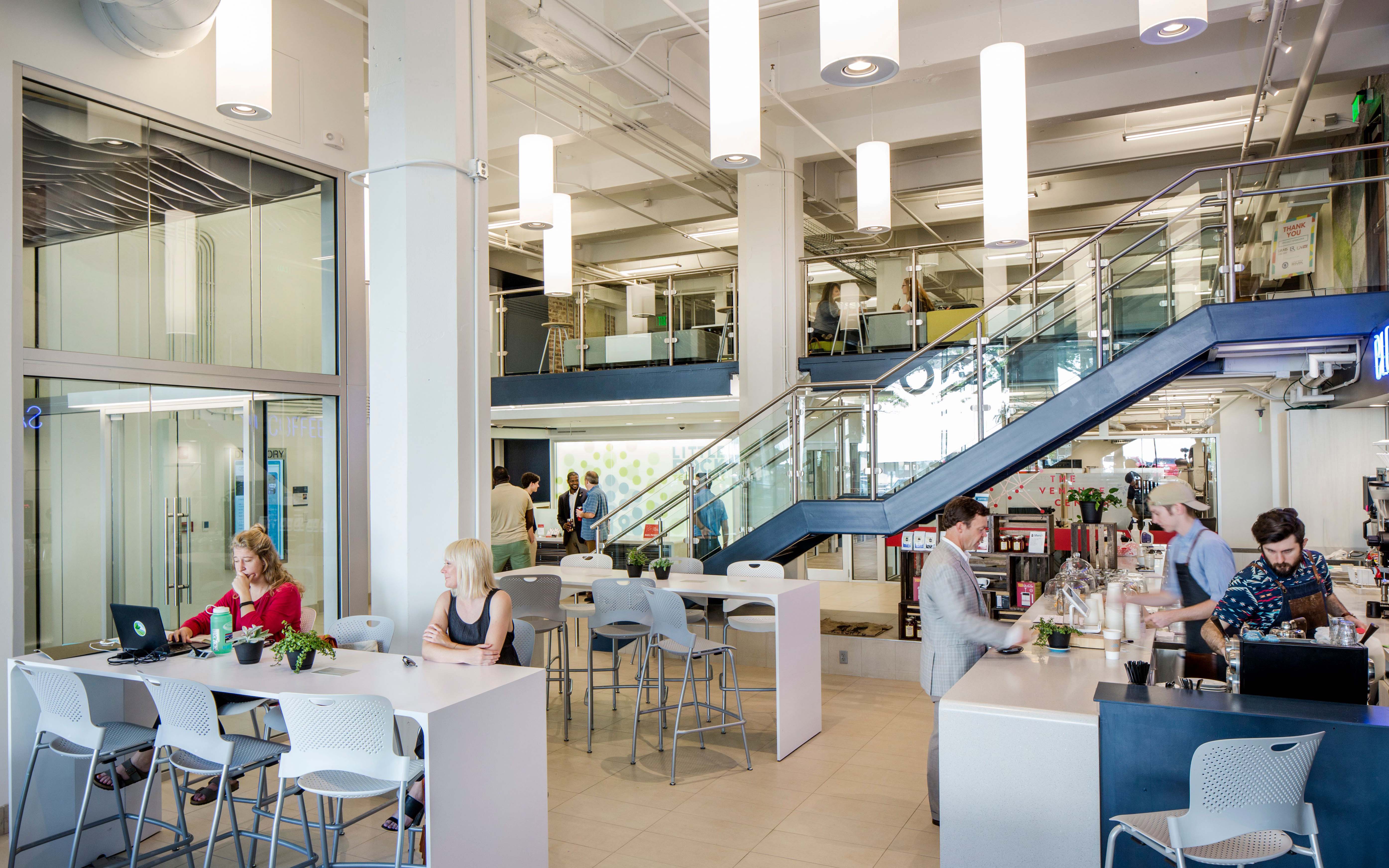
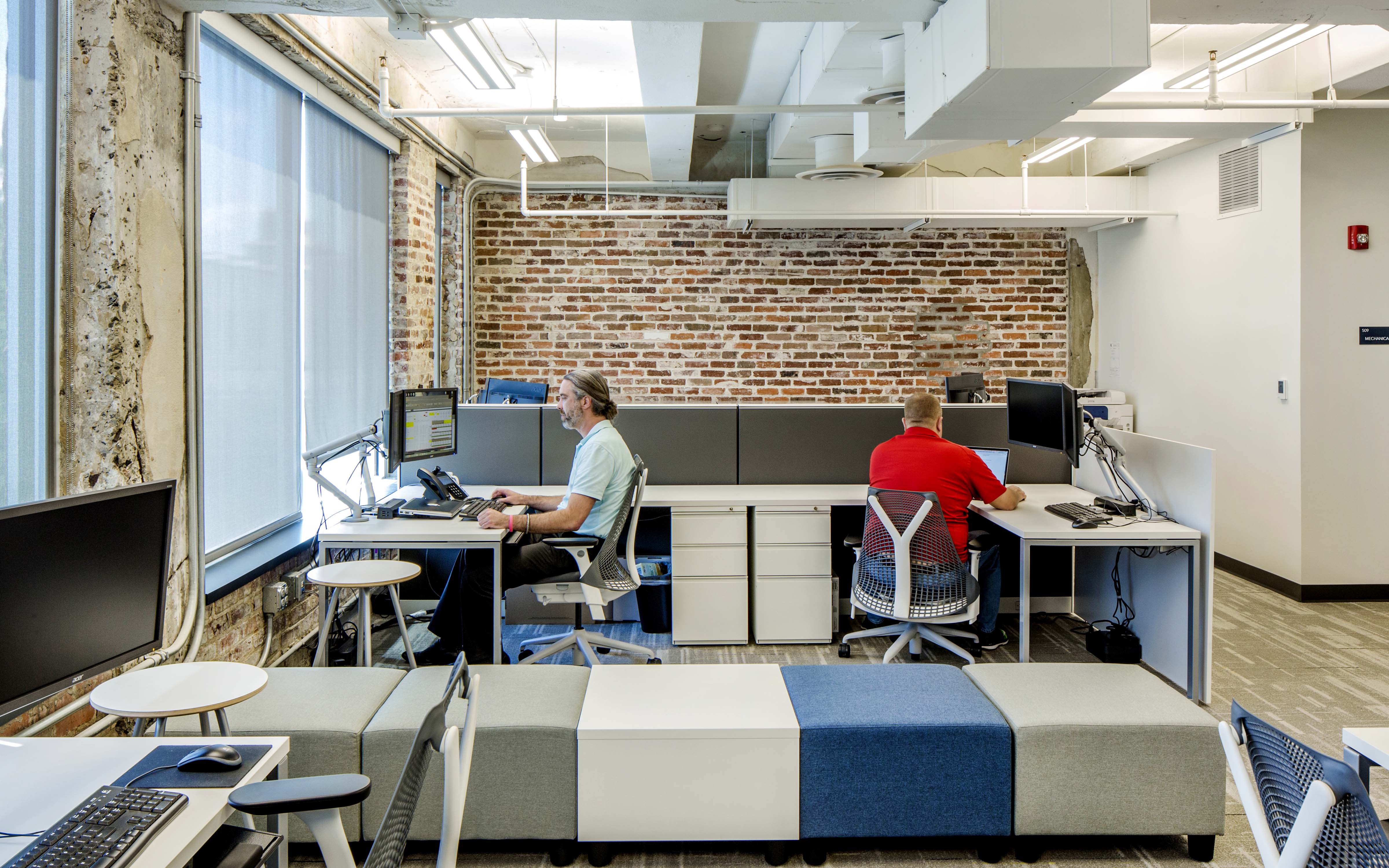
The flex offering, which Kelley described as “Airbnb for office use,” borrows elements from co-working spaces, traditional office layouts and executive suites with shared office technology and amenities. To this, flex spaces add creative lease and rental agreements that appeal to tenants dealing with uncertain times.
“The executive center deal is not new, as a concept,” said Cheryl White, Kelley Commercial’s senior property manager and partner. “The new part of the concept is on flexible terms and flexible space. We’ve got people that pay a monthly fee to be able to use a conference room even though they work out of their home.”
“It’s really just adjusting your thinking around what your business is leasing in the space, whether it’s by the day, by the week, by the month, by the year. It’s a change in mentality.”
The flex space concept has enjoyed leaps-and-bounds growth around the U.S. prior to COVID-19. Originally home to freelancers and startups almost exclusively, flex space has grown its appeal outside of these circles. New York-based flex space vanguard WeWork, for example, has grown its enterprise tenants to 40% of its customer mix in just four years, reports Coworking Insights.
Maggie Hogan, Kelley Commercial Partners’ chief financial officer, said the concept is catching on fast in The Natural State, too.
“We saw an uptick in the number of our executive suites being rented. These are all kinds of single-person offices and double-person offices where you can have a support person,” she said. “They’re all plug-and-play; we include internet, we have the phone system, we have coffee and water, and we bring them their mail.”
“All of those leases are very flexible and we can do it month-to-month, we can do a three-month lease, we can do a one-year lease. We’ve really pressed hard on these executive centers and flexible leasing and that’s where we’re seeing a lot of uptick in occupaancy and stability,” said Hogan.
The success of flex spaces has been music to the commercial property industry’s ears, especially over the past 12 months. Vox.com reported in December that the massive work-from-home migration, bolstered by technology and fueled by lingering fears of the virus, have eviscerated office markets coast to coast. In New York’s Manhattan – the nation’s largest office market – only 10% of office dwellers have returned as of year-end and many are expected to stay away permanently.
Flexible office space is the one glimmering jewel in the ashes, growing its leased space in the top 23 U.S. markets 2.5% to 67.1 million square feet as of the third quarter 2020, according to commercial real estate services giant Cushman & Wakefield. And the trend doesn’t appear to be slowing down either; in a recent survey of 80 companies worldwide, Coldwell Banker Richard Ellis (CBRE) found 86% see flexible space as key to their real estate strategy in the future.
In Kelley Commercial’s case, two floors in downtown’s Simmons Tower have been converted to flex space with a third under construction. Additional flex space is being offered in two different buildings in West Little Rock, with more to come.
* * * *
Flex meets Tech “We hope to get [additional] floors of flex space in his building,” Kelley said of the downtown location. “We hope that this move and the ability to offer some spaces on flexible terms pan out to give us a more diverse tenant mix in our building.”
As aggressively as the company is moving with the concept, it’s not alone in the market. Other entities, notably the Little Rock Technology Park, have been on the flexible space bandwagon for some time.
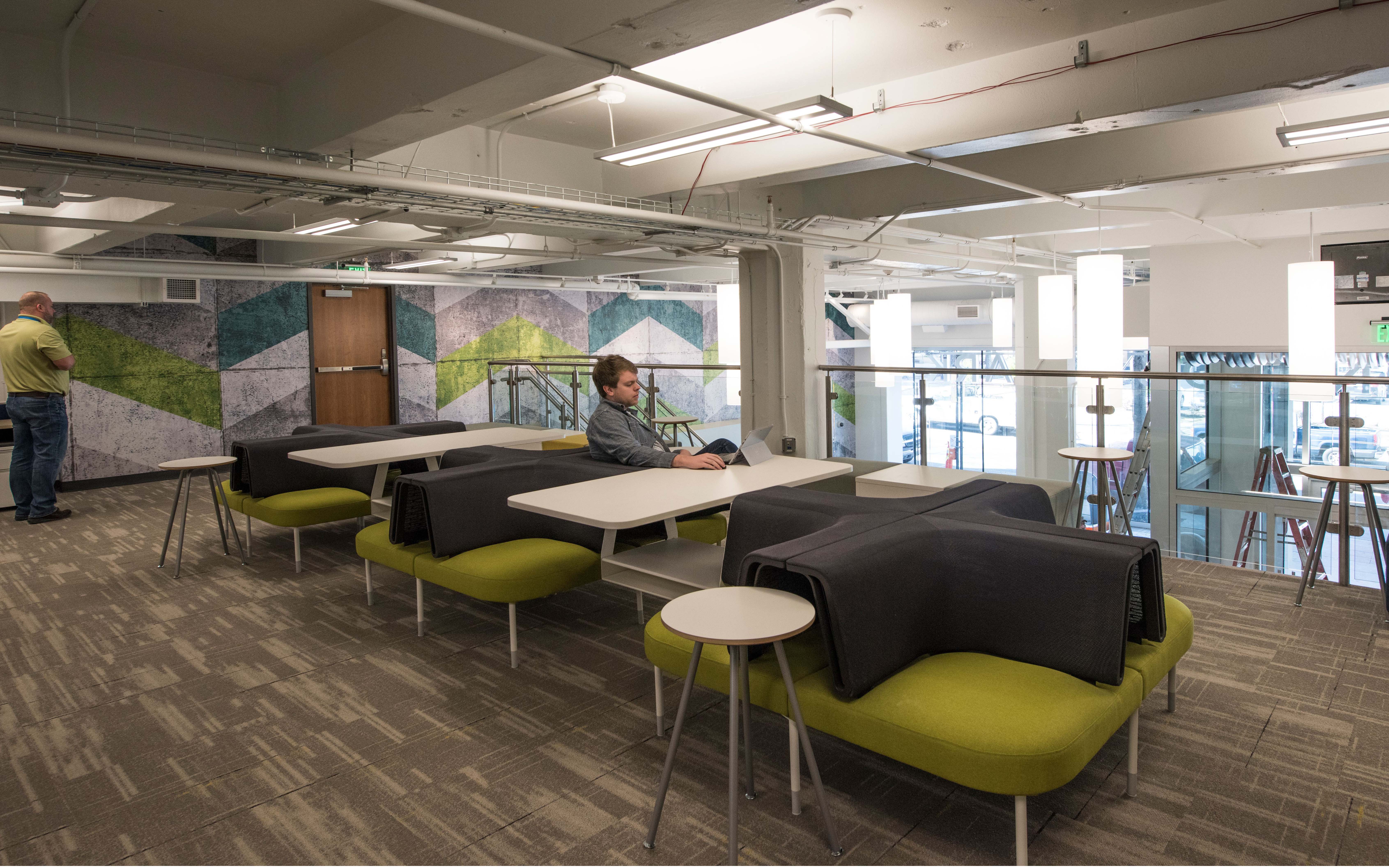
“We were already doing a desk by the hour deal pre-pandemic and we’ll definitely get back into that,” said Brent Birch, director of the Tech Park. “When we had Blue Sail Coffee in here, if you bought something from the coffee shop, you get their Wi-Fi password and you can go up on the second floor and work for an hour or two if you’re waiting to go to the airport or waiting on a business meeting downtown.”
Birch said nearly all the 28 companies that office out of the Tech Park are on month-to-month leases, a notable exception being the Venture Center which has signed a long-term deal. He also noted that while the organization has lost some tenants, mostly it’s been companies that have outgrown available offices.
“I just ran the numbers last week for a city board meeting. As far as the offices go, we have 71% of those currently leased,” he said. “We’ve definitely lost some [tenants] that let our offices go because that wasn’t a good use of their expenses while their business was slowed down. For the most part, though, we’ve hung onto tenants. Several have held onto their offices even if they don’t presently come in very often. They want that same space when things open back up.”
Unlike Kelley Commercial, the Tech Park doesn’t take all comers but instead focuses predominantly on tech startups, with a few ancillary service providers such as small accountants and an insurance company thrown into the mix. These firms are allowed in because of the services they provide to the startups in their various areas of expertise. It’s all part of a collaborative environment that makes the Tech Park and entities like it in such high demand.
“It is not set up to be traditional office space, mainly because there’s a couple different ways these companies overlap each other,” Birch said. “A company that’s in there, maybe the founder of that company, came up with a really good idea and really understands the niche he’s trying to serve, but doesn’t know how to get it built. He doesn’t know how to market it. He may leverage some expertise in the Tech Park of another tenant that’s right next door that can help him with all of those things.”
“Maybe one company’s been through the startup phase and they’re into a different situation where they’ve got revenue and they’ve got customers and other startups can learn from those experiences,” explained the Tech Park’s lone employee and chief landlord. “We’ve even seen a few companies that came in the door as three or four different companies, but they combined their services to form one company. We’ve seen a couple of them really take off and have some success that way.”
Birch said while comparing the Tech Park to other commercial real estate companies isn’t an apples-to-apples equation, the appeal of flexible office spaces, in the broader sense, is consistent.
“Our tenants were already able to do everything remotely before COVID-19. They already had all of the capabilities that the rest of the business world has become accustomed to in all this,” he said. “Being familiar with that ‘work from anywhere’ capability, a lot of them haven’t missed a beat as far as that goes. However, they just don’t feel as accomplished in that environment in their ability to get things done and they also miss the interaction with other people.”
“There’s a lot of collaboration and mentorship and things like that that go on here. It’s been called ‘creative collisions’ where we’re trying to get people to come out of those offices and interact. You never know where that’s going to take you.”
PHOTO CAPTIONS:
1 & 2. Demand for flexible workspace grows as COVID-19 has disrupted traditional offices.
3. Little Rock Tech Park occupant relaxes on second floor lounge at downtown co-working space. (Photo by Chris Cranford)