
Natural State of Architecture
December 24-30, 2018
Bank of America Building
By Mason Toms
A sure sign that the holiday season is upon us has long been the appearance of the Christmas tree of lights on the four sides of the Bank of America Building in downtown Little Rock. The tree of lights has been a Christmas staple in the Capital City for as long as I can remember, but did you know that the Bank of America Building was the tallest structure in Arkansas for a brief time? Or that it claimed that title through an elaborate scheme of misdirection?
Worthen Savings & Loan constructed the tower in 1969-70 to serve as their central offices and to be a statement of their prominence and influence. Their previous home was the Art Deco building on the corner of Fourth and Main Streets, where KATV is currently located. That building was a 1928 design by the firm of Mann, Wanger & King, and had served Worthen well over the years. However, the bank’s massive expansion in the 1950s and 1960s necessitated more space. The bank’s board of trustees turned to the services of renowned local architect Noland Blass, Jr., for a new building design that would carry them into the future and cement their place in the city.
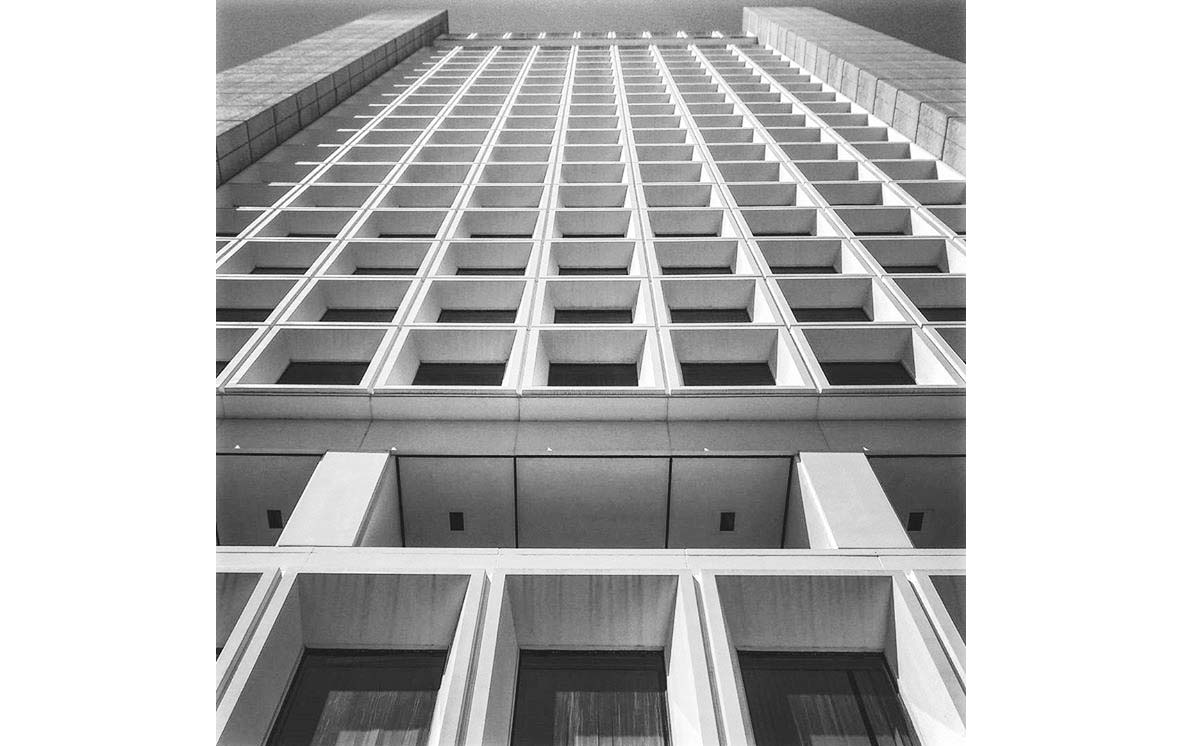
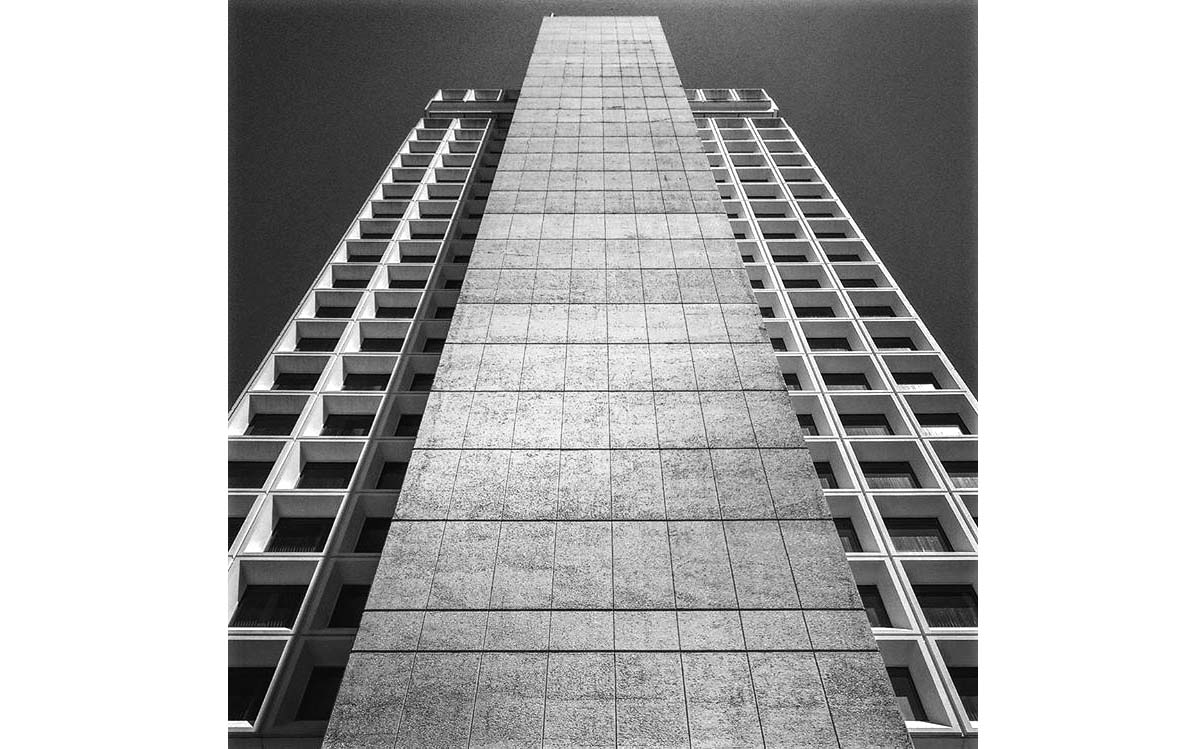
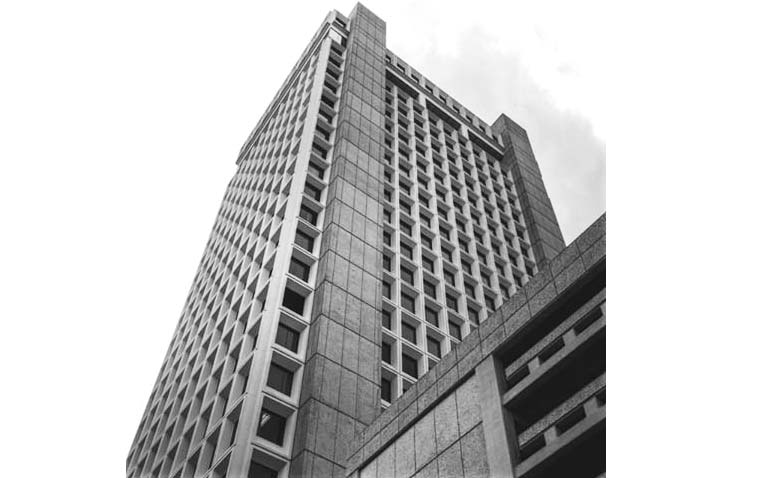
Blass chose the Brutalist Style of architecture for the design, which was popular at the time for civic and bank buildings. Though most people assume the style’s name comes the generally unwelcoming appear of the buildings, the name actually derives from the French term “béton brut,” which means “raw concrete.” The style is credited to famed Swiss architect and father of Modernism, Le Corbusier, and was first seen in his 1952 Unité D’Habitation in Marseille, France, and his 1953 Secretariat Building in Chandigarh, India. However, it would be at least another decade after these buildings were constructed before the style would become popular in America. The late 1960s and early 1970s was the hayday of Brutalism in America. The style was generally characterized as fortress-like, geometric, and made primarily of concrete. Because the buildings projected the idea of stability and longevity, the style was a favorite among banks and civic buildings. When the energy crisis of the 1970s occurred, Brutalism increased in popularity due to the inherent energy efficiency of the construction. However, this also lead to a great deal of poorly designed examples, which, in turn, lead to a very negative association with the style for most people.
Worthen Bank announced its plans to construct a new tower at the same time that Union National Bank was planning a tower of their own, which was conveniently taller. Not to be outdone, the CEO of Worthen Bank went back to Blass and told him to increase the height of the Worthen tower. However, Union National Bank’s new design was a closely guarded secret. After they had poured their foundations and started construction on their tower, the new scheme was released to the public. Since they were so far along, Union National Bank had to stick to their original design, which was completed in 1968. In early 1970, the new home of Worthen Bank was completed. At 375 feet, the new tower surpassed Union Bank by forty-four feet, claiming the title of the tallest building in Arkansas. Worthen would hold onto the title for five years, until it was taken by the 454 foot tall Regions Building in 1975.
Though the Bank of America Building has graced the Little Rock skyline for over forty-five years, the future of the building is uncertain, especially since Bank of America closed their branch in the building. Rumors of a possible restaurant going into the former banking space, if true, can hopefully keep that iconic building with us for years to come. Sometimes the Natural State of Architecture is rather like the Grinch, a rugged, cold figure that becomes a beloved symbol of the season.
PHOTO CAPTIONS:
Once the tallest building in Little Rock’s skyline, the Bank of America Building is a solid example of the Brutalist architectural style. The style is characterized as fortress-like, geometric, and made primarily of concrete. (Photos provided)