
Operation Warp Speed begins “dry runs” trials to send 20 million doses of COVID-19 vaccine to all 50 states
December 7-13, 2020
As Arkansas prepares for the first wave of COVID-19 vaccines by the end of December, top officials will the Trump’s administration’s Operation Warp Speed project revealed on (Thursday) Dec. 3 that 20 million doses of the COVID-19 vaccine will be available for treatment and delivered and administered across the U.S.
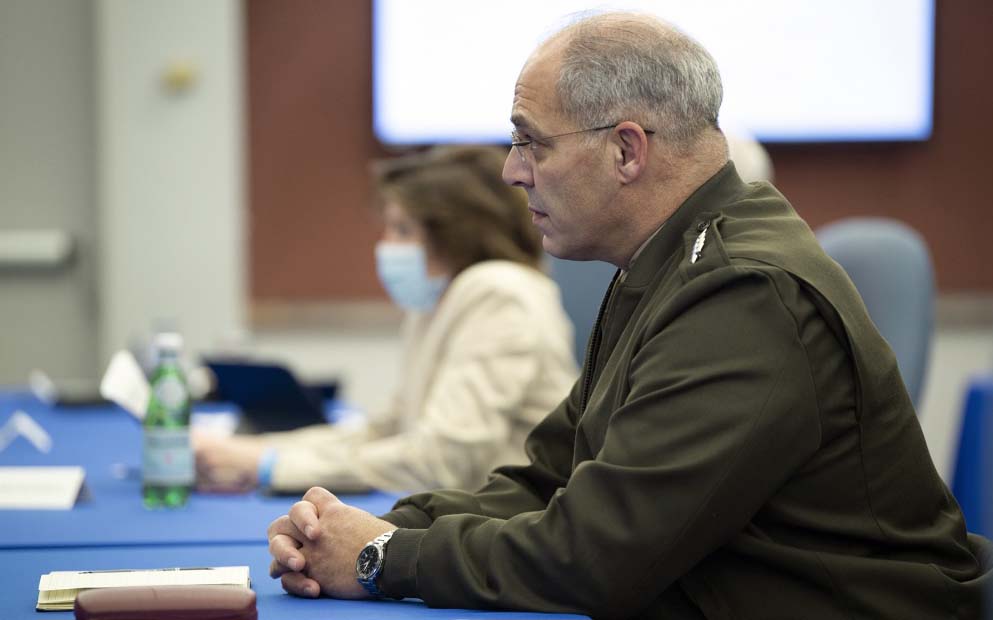
Once the Food and Drug Administration (FDA) authorizes the vaccines from pharmaceutical companies Pfizer and Moderna, the COVID-19 treatments will be distributed to any location in the U.S. that each state approves as the provider, said Department of Health and Human Service Secretary Alex Azar and Army and Gen. Gustave Perna, chief operations officer for the Operation Warp Speed.
‘’We are planning to be ready when an emergency-use authorization (EUA) by the Food and Drug Administration is approved, and when the EUA decision comes (through), distribution to the American people becomes immediate within 24 hours. That’s our goal. That’s what we’re striving for,’’ Perna said during a press conference that included Azar and Dr. Moncef Slaoui, chief advisor for OWS.
Operation Warp Speed, or OWS, is the Trump administration’s overarching effort by several U.S. government agencies and public partnerships to facilitate the development, manufacturing and distribution of COVID-19 vaccines, therapeutics and diagnostics. Charged with developing and delivering a vaccine to 300 million across the U.S., including Arkansas, the nationwide COVID-19 distribution project pairs military planners at the U.S. Department of Defenses with experts at the Centers for Disease Control and Prevention to work the details of a monumental plan.
Perna said OWS officials are now working with each state and jurisdiction to plan and then figure out allocation within the states. For each location, however, there is a minimum delivery requirement of the vaccine, which is 975 doses by Pfizer and 100 doses by Moderna. He said it is also important to ensure everyone understands the cold storage, distribution, use and administration process for the vaccines.
“ I’m very, very confident that we have a solid plan and that we have the ability to observe, watch, monitor, adjust to meet the requirements, as has been specified through the states,” said Perna. He later noted during the conference call that after issuing the initial batch, called the “safety stock,” officials will monitor providers to ensure they’re following the guidelines. Once there is confidence that the process is being followed correctly, more vaccines will be made available to them.
For some time, the Defense Department and the Department of Health and Human Services, in partnership with the Centers for Disease Control and Prevention, has been working with the jurisdictions on how to run scenarios to actually determine where to put the allocation of vaccines to the best advantage, Perna said.
On Nov. 23, The Daily Record first reported that Arkansas’ 50-page plan to roll out a COVID-19 vaccine is still in the working stages and awaiting approval from the CDC. Under Arkansas namesake COVID-19 Vaccination Program, state health officials would prioritize populations that would receive the vaccine first in three phases. Under a Phase I-A scenario that envisions limited COVID-19 doses, the first group to receive the vaccine would be health care personnel likely to be exposed to patients with COVID-19. That group would include Arkansas residents working in hospitals, home health care, primary care clinics, dialysis treatment centers, long-term care facilities, plasma and blood donation workers, public health nurses, school and university health clinics, and ADH local health units.
Phase 1-B of the state’s plan would target people at increased risk for severe illness from COVID-19, including minority populations, those with underlying medical conditions, and people 65 years or older. That plan would also target local daycare workers, employees at correction facilities, K-12 teachers and staff, law enforcement, laborers in the state’s poultry and meatpacking industry, and other government personnel.
In Phase 2, as increased supplies of the vaccine are available, COVID-19 shots would be expanded to all Phase 1 population not previously covered in health care settings such as doctor’s offices, dental clinics, and pharmacies. Next in line would be critical workers in utilities services, transportation, and local grocery stores, followed by workers at food manufacturing plants, nursing homes, and state universities.
As vaccine supplies continued to grow and demand for COVID-19 shots slowed, state health care officials would expand the inoculation network in Phase 3 to target hard-to-reach populations, the homeless and areas with low uptake rates to reach those wary of vaccines or getting shots. (See the Daily Record story here: https://www.dailyrecord.us/arkansas-vaccine-distribution-plan-still-in-the-working-stages-as-covid-19-cases-spike-statewide
Perna said the OWS team is currently holding “dry runs” to practice distribution of the COVID-19 vaccines. Perna said it was exciting to watch Pfizer and Moderna go through similar processes to make sure that their product is right from the beginning. Both companies’ vaccines, which are expected emergency approval from the U.S. Food & Drug Administration before Christmas, have also stated that Phase 3 clinical trials have shown nearly 95% effective in treating COVID-19 with few side effects.
“We’re working on this constantly. We work rehearsals of different scenarios to make sure we’re capturing all the nuances of the delivery,” said Perna. “But each and every week we get stronger. Each week we’re one week closer to distributing the vaccine, we’re one week closer to refining to the exactness that we need to have to do this. And I’m very confident in that process.”
Perna, a four-star Army general, also said Pfizer is implementing an extremely aggressive approach to figuring out how to get their product out to the administration sites. He said the New York-based pharmaceutical giant is rehearsing and running through the actual process of registering products through a jurisdiction.
Then they are delivering the product and walking through the administration sites to open boxes and dispense the vaccines, he said. Through this process, Pfizer is capturing lessons learned and putting those in training product back sheets, as well as creating training videos.
The Pfizer vaccine also has an ultra-cold storage requirement. This is not necessarily a limiting factor though, Perna said, because Pfizer has created a container that is augmented with dry ice that maintains the vaccine at the appropriate level for up to 20 days.
To date, there are 54 locations where this training is taking place. As Pfizer has worked with those sites “we see growing confidence in everybody [who is] using it. And that has been the story throughout every rehearsal.”
Moderna’s storage requirement is not as cold – about the temperature of a kitchen freezer, which most pharmacies have, OWS officials. It has greater stability in that it can go into this refrigeration for up to 30 days. Therefore, the Moderna variety will make it easier to get to more rural areas.
Perna also noted that OWS has announced agreements with CVS and Walgreens to provide and administer COVID-19 vaccines to residents of long-term care facilities (LTCF) nationwide with no out-of-pocket costs. Nursing home and long-term care residents are also part of the prioritized groups for initial COVID-19 vaccination efforts until there are enough doses available for every American who wishes to be vaccinated, he said.
“We are well on our way to successfully administering both vaccines to the American people in the near future,” said Perna.
Arkansas hospitalizations rise as state gets ready for COVID-19 vaccine
As his daily COVID-19 press briefing on Nov. 30 and Dec. 1, Gov. Asa Hutchinson said he has received communication from the FDA Director Stephen Hahn; Azar and Dr. Anthony Fauci at on the vaccine distribution plans for Arkansas. He said in the early stages of distribution there will be a limited supply for Arkansas healthcare workers but not enough for the general public.
“We are working hard in Arkansas in terms of being ready for the vaccine distribution whenever it gets here,” he said. “Once it is pre-approved by the (FDA), it will be in Arkansas within 24 hours.”
Hutchinson urged all Arkansans to continue observing CDC guidelines on social distancing and other safety measures as COVI9-19 cases, deaths and hospitalizations continue to spike. He said Arkansas hospitals and healthcare workers are under duress due to being overworked and the lack of bed space.
“I am really thankful for our healthcare workers across the state of Arkansas,” Hutchinson said. “We are entering our tenth month of this pandemic and they started out under stress and continue under stress for this long of a period of time, and as we see our hospitalizations go up – I recognize what our hospital workers are doing to save lives and to be diligent, and we are grateful for them.”
In its last update, the Arkansas Department of Health reported a total of 157,359 cases and 2,502 deaths. There were also nearly 1,100 COVID-19 patients in hospitals across the state.
PHOTO CAPTION: (Photo by Department of Defense)
Army Gen. Gustave F. Perna, chief operating officer of Operation Warp Speed, monitors a COVID-19 distribution simulation exercise in Washington, D.C.