
Arkansas Explained: How to use the Arkansas Freedom of Information Act
March 23-29, 2026
1967 law protects public’s access to government meetings and records
By Ainsley Platt
Want an Arkansas government record or access to a public meeting? There’s a law for that.
The 59-year-old Arkansas Freedom of Information Act protects Arkansas citizens’ access to a wide array of government documents and the public’s access to open meetings.
In honor of Sunshine Week, which is dedicated to educating the public about their right to know what’s going on within their local, state and federal governments, the Arkansas Advocate wrote a guide to the state’s open records and meetings law, and how you can use it.
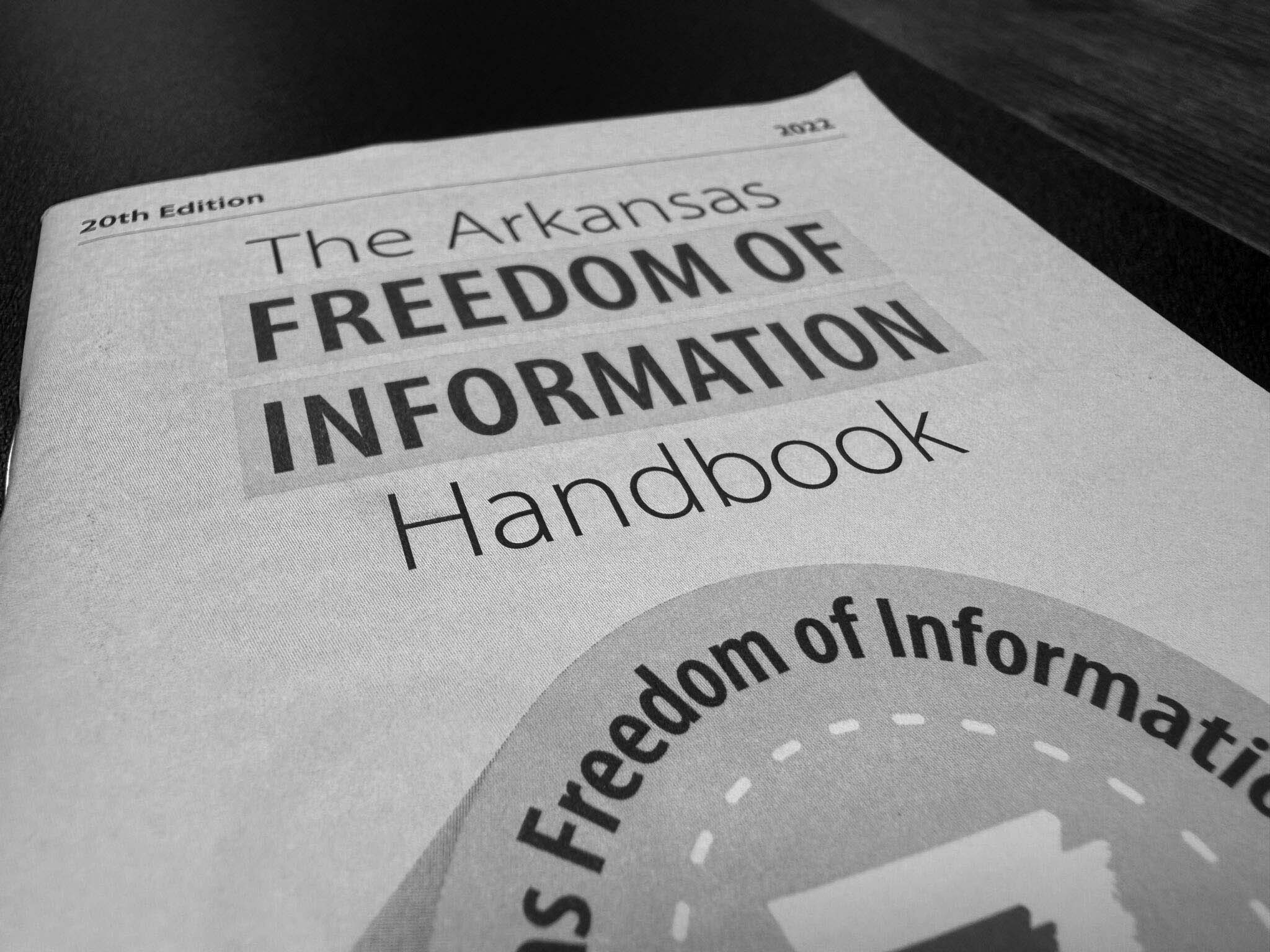
The Arkansas attorney general’s office, the Arkansas Press Association and other groups also publish a handbook for the Arkansas FOIA after each general legislative session with the text of the law as well as relevant attorney general opinions and court cases, which can be found here.
What is the Arkansas Freedom of Information Act?
It’s the state law requiring local and state governments to hand over a broad array of records to Arkansas citizens and certain nonresidents who request them, with only specific exceptions. It also outlines requirements for public access to meetings of governing bodies like city councils and state commissions.
Gov. Winthrop Rockefeller signed the law in 1967, and it has seen numerous revisions over the years in response to changes. The alterations have come due to changes in technology as well as security and privacy concerns over the years. The law itself is supplemented by rulings handed down by state courts regarding how the law should be interpreted.
“It is vital in a democratic society that public business be performed in an open and public manner so that the electors shall be advised of the performance of public officials and of the decisions that are reached in public activity and in making public policy.”
– The legislative intent section of the Arkansas Freedom of Information Act
The Arkansas FOIA is widely regarded as one of the best and strongest state records laws in the country. It contains language that makes the law broadly applicable to most government records, and specifically bars state and local government from withholding a requested record unless there is a clear exemption in the law allowing it to do so.
Some legislators in recent years have attempted to significantly alter the law to impose greater costs and restrictions on public records requests. An effort in 2023 that would have created sweeping new exemptions was scaled back after facing backlash from press groups and conservative activists. The reworked law, however, still exempts records regarding the governor’s security. Other changes to the law last year clarified the definition of a public meeting.
Who is required to disclose records under the Arkansas FOIA?
Just about every government entity in the state of Arkansas, with a few exceptions. The law covers city councils, planning boards, quorum courts, state agencies, law enforcement agencies and more.
Exceptions in the law make it so the “unpublished memoranda, working papers, and correspondence” of the governor’s office, Attorney General’s office, Arkansas Supreme Court justices, appeals court judges and members of the Legislature are exempt from disclosure under the law.
That means if someone makes a FOIA request to the governor’s office asking for Gov. Sarah Huckabee Sanders’ emails — or the emails of the governor’s staff — those records aren’t required to be handed over.
However, that exemption only applies to records that are in the possession of the exempted offices and individuals. If a member of the governor’s staff emails an employee of a non-exempt agency, such as the Arkansas Department of Health or Department of Energy and Environment, for example, that email can still be obtained via a FOIA request sent to the non-exempt agency unless another exemption applies to it.
How can I make a public records request?
The Arkansas FOIA says that requests can be made “in person, by telephone, by mail, by facsimile transmission, by electronic mail, or by other electronic means provided by” the agency a requestor is requesting records from.
These other electronic means often manifest in the form of public records portals, such as this one used by the city of Little Rock.
Requests need to be “sufficiently specific” so that the agency is able to find the records being requested.
Groups such as the National Freedom of Information Coalition also offer sample FOIA request letters online.
What else should I know about the Arkansas FOIA?
The law requires that records must be disclosed immediately upon receiving a request for them unless they are in active use or storage. In that case, the records custodian has up to three business days to disclose them.
There are also additional restrictions on personnel and job performance records of government employees, and they can only be released when certain criteria are met.
An agency rejected my request, what should I do?
Agencies are required to identify the reason a request is rejected. If you disagree with the rationale provided by the agency, you can sue the agency in a state court to try and force them to disclose the records. Negligently violating the FOIA is a misdemeanor.
Ainsley Platt covers the environment, energy and other topics as a reporter for the Arkansas Advocate.
Arkansas Advocate
Photo caption:
The cover of a copy of the Arkansas Freedom of Information Handbook.
Photo credit:
Photo by Ainsley Platt/Arkansas Advocate