

VU Unity Poll: Americans share angst around economy, AI and politics
March 16-22, 2026
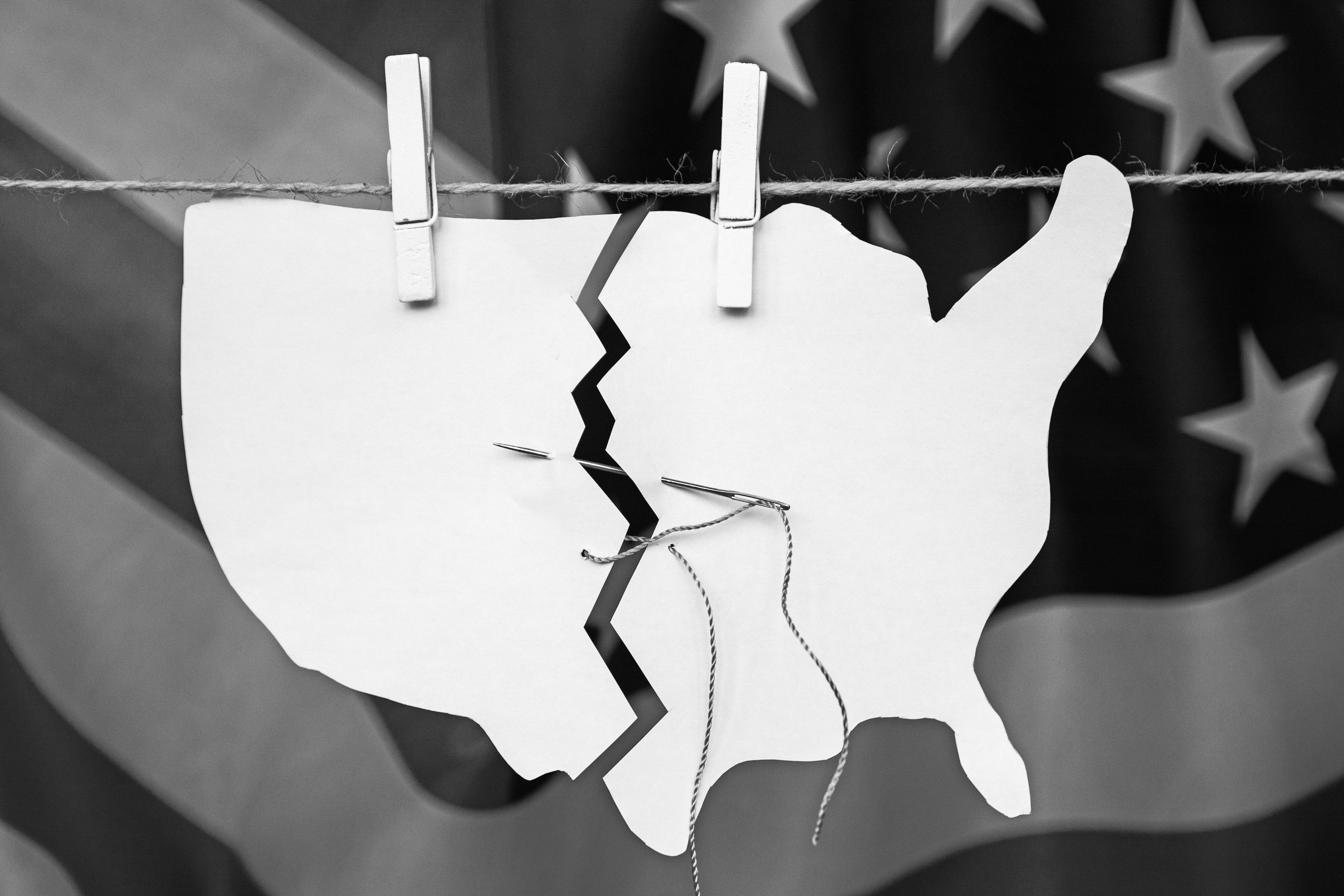
In an apparent contradiction of common headlines about political division, a new national Vanderbilt Unity Poll finds that Americans across party lines are strikingly united in their anxieties about where the country is headed.
The poll from Vanderbilt Project on Unity and American Democracy reveals Americans across party lines share a distaste for “politics as usual.” A broad bipartisan majority of 89% agree (and 74% strongly agree) that Democrats and Republicans need to stop fighting and start working together. Only 26% of the public thinks U.S. involvement in conflicts in areas like the Middle East will make Americans safer—and the poll was taken before the Feb. 28 start of U.S. military strikes on Iran.
Optimism lags most among young Americans
As the country’s 250th birthday approaches, the poll finds U.S. optimism incredibly low. Seventy-three percent believe the Founding Fathers would not be proud of the country today, and 66% agree that the country is on the wrong track. A bare majority of the public are either extremely or very proud to be an American – a figure much lower than just a decade or so ago.
This pessimism is especially prevalent among young people, whose malaise far surpasses that of older citizens. Twenty-eight percent of those polled are “extremely proud” to be American. However, only 12% of 18- to 29-year-olds feel extremely proud, compared with 41% of those 65 and older.
“This staggering lack of optimism among young people is disconcerting for the country’s future,” says John Geer, co-director of the Vanderbilt Unity Poll and professor of political science.
A full 56% of those polled say they believe that the nation’s “best days are behind us.” Despite this, Americans are united in their desire for collaborative, democratic solutions rather than authoritarianism. Only 28% agreed that “strong leaders sometimes have to break the rules.” Nearly half of MAGA Republicans agree (47%), while less than a fifth of Democrats share that view (19%).
Angst around AI and employment
Technology is amplifying national anxiety, rather than alleviating it, the poll finds: Americans are concerned about finding and keeping jobs in the AI era. There is also bipartisan support for technology regulation, with 61% of Republicans and 56% of Democrats favoring it. There was no divide between the age groups on regulation: 56% of those 18 to 29 years old and 58% of those 65 and older support it.
In line with the lack of optimism among young people, 64% of those polled agree that it is becoming harder for young people to find stable, well-paying jobs. More than a third (37%) are worried about job security and being able to support their families due to the rise of AI. But here we find a big gap depending on the respondent’s age: 47% of those 18-29 years old are worried, while only 26% of those 65 or older say they are.
“These concerns about the impact of AI on the future of work cross party lines,” says Josh Clinton, Vanderbilt Poll co-director, holder of the Abby and Jon Winkelried Chair at Vanderbilt and professor of political science. “Americans are concerned about what technological disruption will mean for their ability to find and maintain employment.”
Fractured coalitions and party divisions
Americans are frustrated by the two-party gridlock and by the deep internal divisions among Republicans and among Democrats. An overwhelming 89% of Americans want politicians to stop fighting.
Splits within parties persist. The Republican base is highly fractured, with 39% (down from 52% in February 2025) identifying as MAGA movement supporters, and 61% identifying as traditional Republicans. The Democratic base is similarly divided, with 62% aligning with the traditional Democratic Party and 38% identifying as supporters of the Progressive movement (down from 48% two years ago). Among Democrats, there are only small differences between traditional and progressive leanings. But that is not true for Republicans: There are often large divides between MAGA and traditional Republicans.
Economic reality gap breeds distrust
The current state of the union is not working for the average person. Americans report growing economic pressures alongside plummeting trust in a “rigged” system and politicians.
When asked if their cost of living has decreased, 77% disagree, with 58% strongly disagreeing. As for the current U.S. economy, 63% rate it as “fairly bad” or “very bad.” A majority (55%) believe billionaires gained wealth by “bending the rules.”
Along with having serious concerns (82%) about members of Congress benefiting financially from their offices, poll respondents don’t think either party is compassionate. Only 12% believe Democrats care “a great deal” about people like them, and 13% report feeling the same way about Republicans.
“The poll makes clear that this widespread anxiety isn’t a partisan issue,” Geer says. “Foundational economic problems facing average citizens are not being solved, and the subsequent disillusionment is reflected in these numbers.”
Poll methodology
Conducted through SSRS on the Opinion Panel Omnibus platform, the poll surveyed 1,032 U.S. adults, Feb. 20-23, 2026. Participants answered questions largely focused on issues related to perceptions about the state of the U.S. The survey has a margin of error of +/- 3.5 percentage points.
About The Vanderbilt Project on Unity and American Democracy
The Vanderbilt Project on Unity and American Democracy is a nonpartisan initiative dedicated to generating, curating and disseminating evidence-based knowledge about how to heal societal divisions. The project aims to replace contempt and polarization with respect and collaboration, strengthening the core of American democracy by bringing together leading scholars, political leaders and practitioners. The project is committed to rigorous research and its practical application to empower individuals and communities to bridge divides. This poll is an example of injecting evidence into the national debate.
Vanderbilt University
Photo credit:
RomanWhale studio / stockadobe.com